

Smoke Detector Replacement in Phoenix, Arizona
Alarms more than ten years old can fail when it matters most. Our licensed electricians replace every smoke and CO detector in your home, hardwired or battery, in one visit, with per-unit pricing you know before we arrive.
North Phoenix based · Serving all of metro Phoenix
Start with the question that brought you here
Why does my smoke detector keep chirping?
A chirp that survives a fresh battery is the alarm telling you it is done. Most units chirp at end of life, and hardwired models add wiring or compatibility faults on top. We diagnose the cause and replace what has expired in one visit.
Are your alarms more than 10 years old?
Smoke alarms expire ten years from the manufacture date printed on the back. The National Fire Protection Association (NFPA) and alarm manufacturers both recommend replacing them every 10 years. If your home still has its original detectors, the whole set is overdue. We check the dates and replace them together.
Who replaces hardwired smoke detectors?
A licensed electrician. Hardwired and interconnected alarms are household wiring, with brand compatibility, interconnect testing and vaulted ceilings thrown in. That’s the work our electricians do every day.
Smoke alarms expire. Ten years, then they’re done.
Every alarm carries a manufacture date on the back of the unit. The NFPA and alarm manufacturers both recommend replacing smoke alarms every 10 years. Detectors installed together expire together, which is why we price by the unit and replace the whole set in one visit.
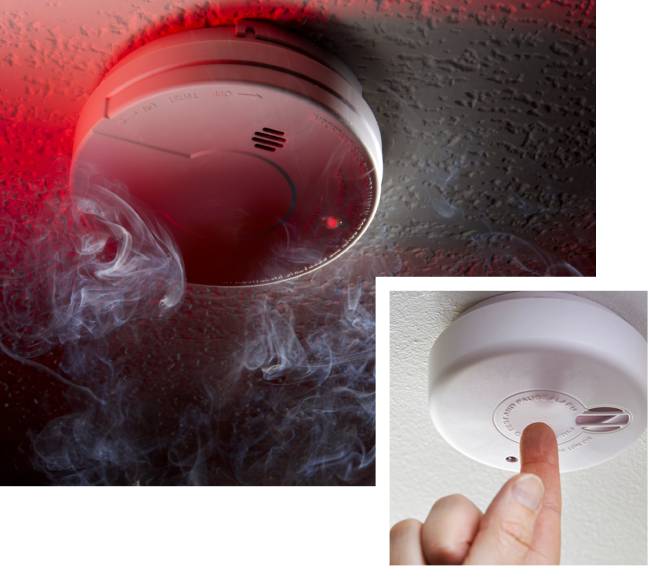
Hardwired alarms are electrician work. That’s who we send.
If your home was built in the last few decades, its alarms are probably hardwired and interconnected. Replace one wrong and the set stops talking to each other. Our licensed electricians handle the wiring, match compatible models across brands, test the interconnect, and bring the ladder for vaulted ceilings.
What we replace
Smoke detector replacement
Every alarm in the house replaced in one visit: expired units, failed tests, whole-home refreshes. We test the interconnect and dispose of the old units.
Hardwired & interconnected
Hardwired alarms belong to a licensed electrician, not a ladder and a guess. We handle wiring, compatibility between brands, and high or vaulted ceilings.
Carbon monoxide detectors
CO alarms age out just like smoke alarms. We replace standalone and combination smoke/CO units, including sealed 10-year battery models.
Licensed electricians
Upfront per-unit pricing
Most visits under an hour
Old units removed & disposed of
Where we work
Arizona
Based in North Phoenix and serving all of metro Phoenix: Scottsdale, Paradise Valley, Tempe, Mesa, Chandler and the communities in between.
Scottsdale & Paradise Valley
Bigger homes with 20 or more detectors get the same deal: the whole set replaced in one visit, priced per unit.
Property manager? Ask about portfolio standardization: per-unit pricing and documented replacement dates. Get in touch.
Common questions
How often should smoke detectors be replaced?
Replace smoke alarms 10 years from their manufacture date, printed on the back of the unit, or sooner if the manufacturer says so or the alarm fails a test. That guidance comes from the NFPA and the alarm manufacturers.
My detector keeps chirping after a battery change. Why?
A chirp that survives a fresh battery usually means the unit itself has reached end of life, or a hardwired unit has a wiring or compatibility problem. Either way, it’s telling you to replace it. Batteries won’t fix it.
Do I need an electrician for hardwired smoke detectors?
Yes. Hardwired and interconnected alarms involve household wiring, and fire-safety authorities recommend a qualified electrician for the work. That is exactly what we do, including brand compatibility and homes with high ceilings.
Should all the detectors be replaced at once?
If they were installed together, they expire together. Replacing the whole set in one visit keeps every room protected, keeps the models compatible, and costs less per unit than one-off calls.
Know your number before we knock.
Count your detectors, pick a model, and the per-unit price includes labor, materials and tools.